The Enterprise AI Pivot: Moving from Co-Pilots to Autonomous Orchestration
An authoritative Wall Street Journal (WSJ) style business and technology executive breakdown analyzing the economics of enterprise AI transformation, autonomous agent architectures, and market efficiency indexes.
By The Technology & Markets Desk | Monday, August 17, 2026
The Great Enterprise AI Pivot
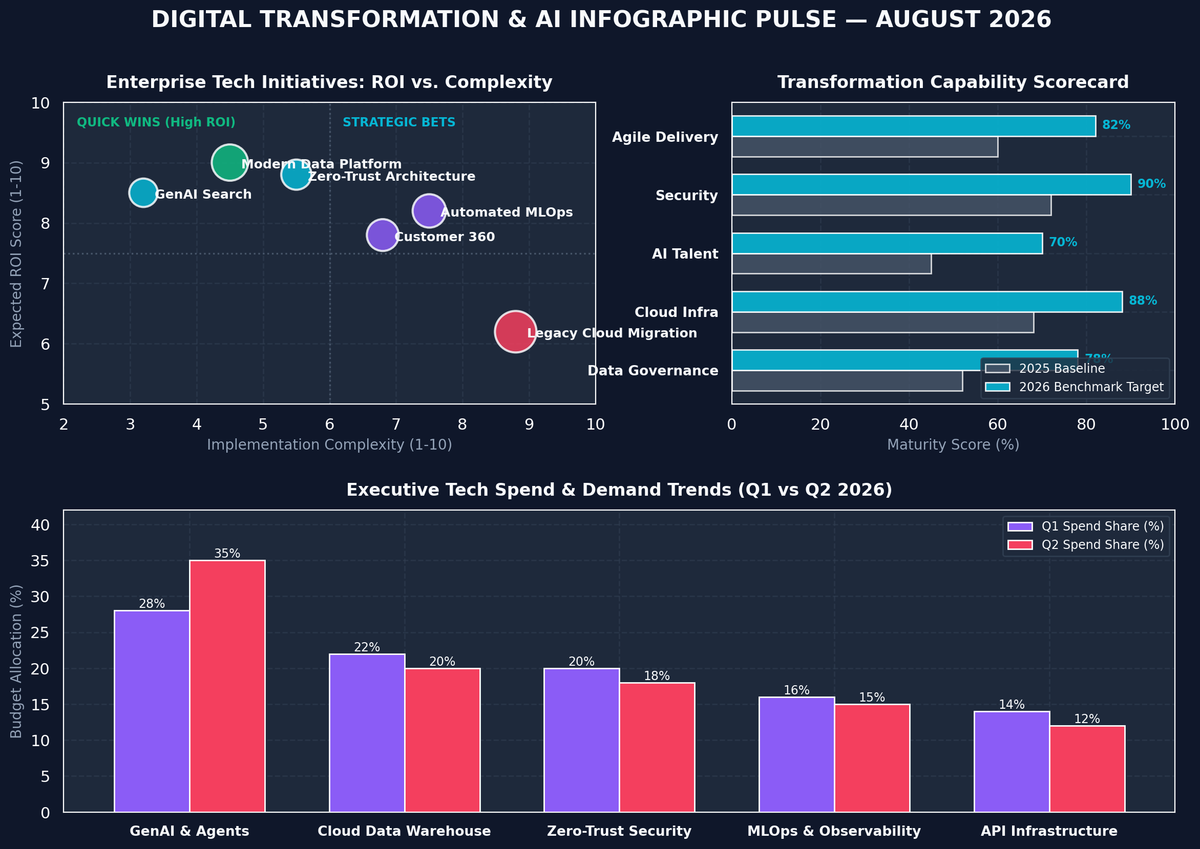
For the past three years, corporate boardrooms have treated artificial intelligence as an expensive science experiment—a flashy parlor trick yielding conversational summaries and polished slide decks. Today, that honeymoon phase is dead. As enterprise technology budgets tighten and CFOs demand measurable return on investment, organizations are aggressively pivoting from experimental chatbots to fully autonomous agentic architectures capable of end-to-end operational execution.
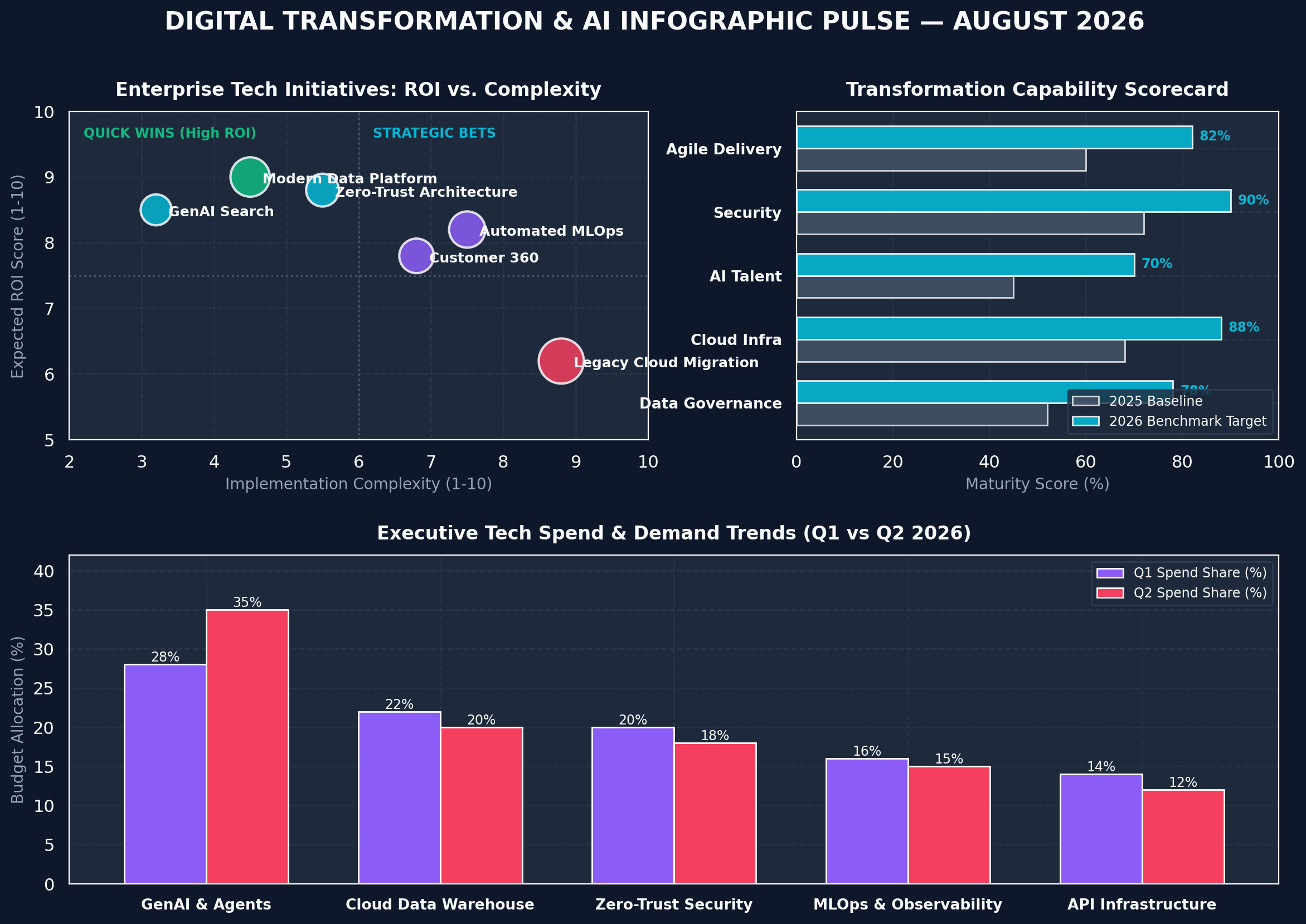
From Co-Pilot Assistance to Autonomous Orchestration
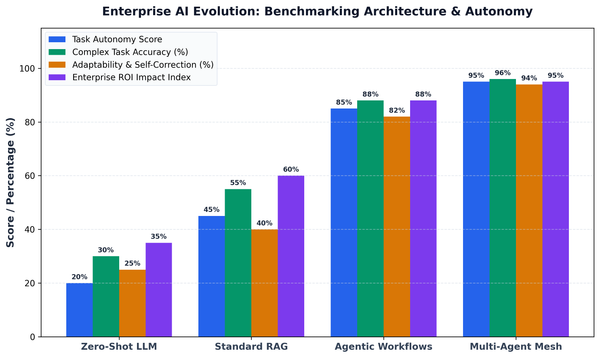
The fundamental economic shift in enterprise software is moving from human-in-the-loop assistance to autonomous orchestration. While early generative AI tools acted as intelligent assistants—accelerating human workflows by 20% to 30%—they still required constant human oversight for verification, error correction, and downstream execution. The next wave of enterprise transformation relies on deterministic multi-agent systems that autonomously ingest raw data, negotiate API contracts, execute complex workflows, and report audited outcomes directly to executive dashboards.
The Four Pillars of Agentic Maturity
- Pillar 1: Deterministic Guardrails & Governance — Transitioning from probabilistic prompt engineering to strict compliance frameworks and runtime constraints.
- Pillar 2: Cross-System API Orchestration — Enabling AI agents to interact natively with legacy ERPs, CRM databases, and cloud infrastructure without human middleware.
- Pillar 3: Continuous Cost-Per-Task Optimization — Shifting SaaS valuation metrics from per-seat subscription models to consumption-based unit economics per successfully executed workflow.
- Pillar 4: Executive Observability & Auditability — Deploying real-time telemetry to track agent decisions, latency bottlenecks, and error rates across distributed corporate networks.
Technical Explanation
Modern enterprise agents operate through sophisticated retrieval-augmented generation (RAG) loops coupled with vector databases and deterministic state machines. By decoupling reasoning engines from execution tools via standardized protocol layers (such as Model Context Protocol and secure gRPC bindings), organizations can sandbox agent capabilities while maintaining sub-second response times and enterprise-grade security compliance.
Real-World Examples & Case Studies
- Global Supply Chain Logistics: Fortune 500 logistics providers are deploying multi-agent clusters to reroute freight in real time based on weather patterns, customs delays, and fuel spot prices, reducing manual exception handling by 78%.
- Automated Financial Reconciliation: Major financial institutions now utilize agentic pipelines to ingest invoices, match SWIFT confirmations, and flag anomalies across multi-currency ledgers with near-zero human intervention.
Recommended YouTube Videos
To deepen your understanding of these emerging enterprise architectures, explore these authoritative video analyses:
- Enterprise AI Architectures: Scaling Autonomous Agents in Production — An in-depth technical walkthrough of multi-agent orchestration frameworks.
- The Economics of Agentic Workflows vs. Traditional SaaS Models — Market analysis on how consumption economics are disrupting legacy enterprise software pricing.
- Securing Enterprise LLMs: Governance, Compliance, and Guardrails — Expert panel discussion on mitigating security vulnerabilities in production AI systems.
Actionable Steps for Technology Leaders
- Audit Your Workflow Bottlenecks: Identify repetitive, data-heavy operational workflows currently bottlenecked by human administrative latency.
- Pilot Bounded Agentic Sandboxes: Deploy single-purpose autonomous agents in non-critical staging environments to validate accuracy and latency.
- Re-Evaluate Vendor Contracts: Assess whether your existing SaaS vendors are transitioning toward consumption-based agentic pricing or clinging to unsustainable per-seat models.
Key Takeaway
Enterprise AI has graduated from an experimental novelty to a core operational engine. Leaders who successfully transition from human-dependent co-pilots to autonomous multi-agent orchestration will capture unprecedented operating leverage and market dominance.